

How Myth-Making Can Cure Our Cultures Nihilism
Xenophon, Meaning, and Whole Foods

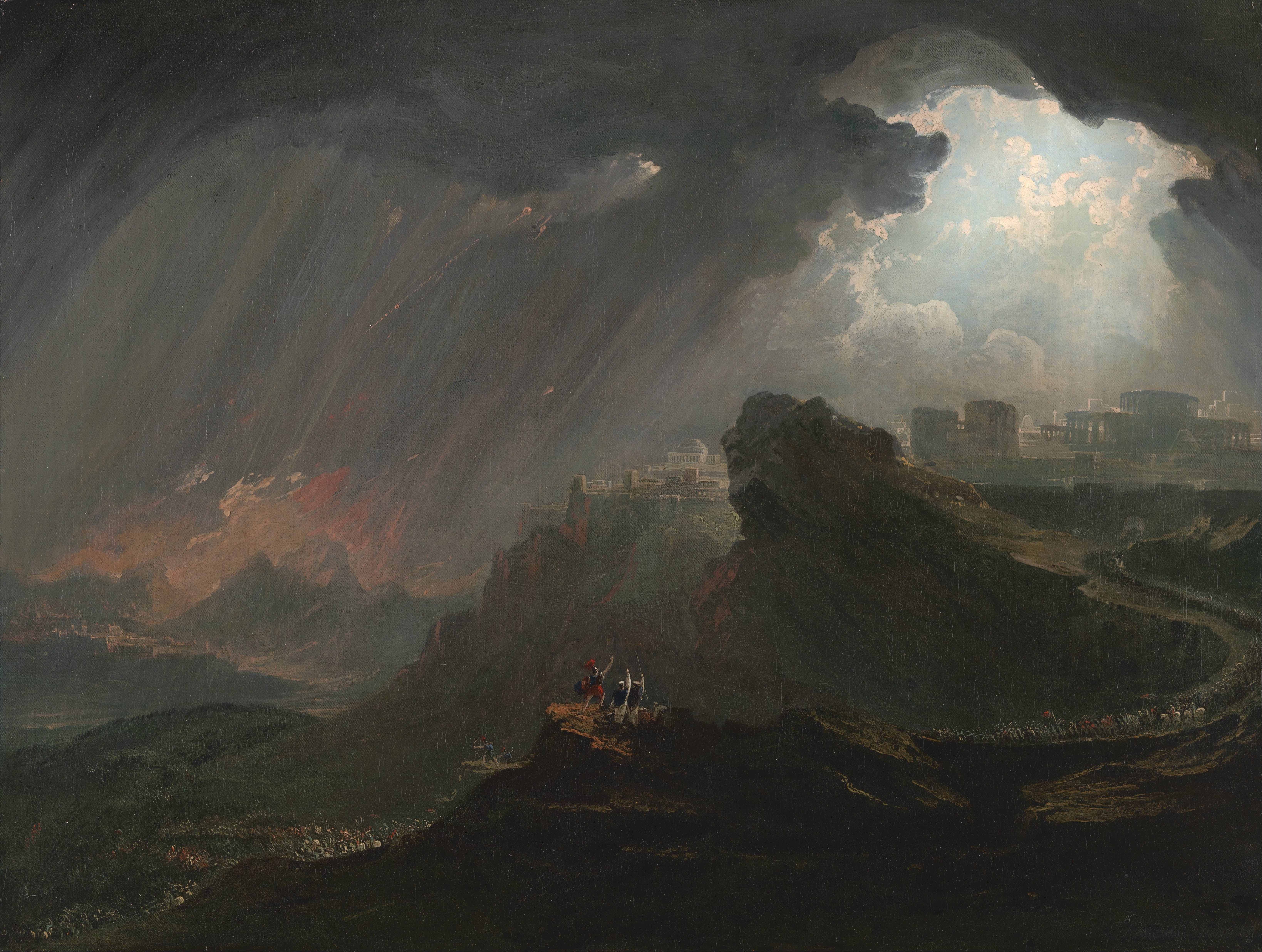

Nihilism and meaninglessness—There exists a difference between myth-making strength and fact-making strength.1
For the most part, we find fact-making strength in easy times, and myth-making strength in hard times. The vibe at present is that myths are only to be found in old books or digitally enhanced superhero movies. But not in the real world. Here, we see an obsession with facts.
My feeling is this fact-making strength has led to advances in science, productivity, and longevity. Counter-intuitively, it has also led to reductionism, numbness, and nihilism. The defining illness of our age is the anxiety that life may be irrelevant—and meaningless. A sense that some cosmic injustice has been done and something lost which will never be reclaimed.
It ignores the truth that myth is all around us if we choose to see it.
He deserves more subscribers—I am a fan of Xenophon. He deserves more pom-pom waving than he gets. During one of the blackest moments of his legendary ruck leading 10,000 mercenaries through the godawful mountains and frost-bitten winters of Persia, Xenophon gazed at his enemy, the Kolchoi. They held the only pass for hundreds of miles. They were all that stood between his men and their salvation in the Black Sea. This enemy was famed for cutting their prisoners to pieces joint by joint. Sometimes they would roast them alive or even gouge out their eyes to mix things up.
It is here our warrior stood his ground. I can see him stop and stare at his enemies swords glinting in the sun. I can see him turn to his men and say one of the most epic displays of the human soul cranked up to its maximum intensity: “We must eat them raw.”
I sat with this for a while.
This is myth-making strength. It struck me that if Xenophon were in those mountains with fact-making strength, he would have faced the facts and stopped there. Unpassable cliffs, enemy who climb like mountain goats, the burden of command, maybe some savage screeching—it would be too much for a man who lost his faith in myth. He would have gone numb. He would have said “This is not possible,” or “My men are not worth it,” or “This was not what I expected.” And then he and his men would have been eaten.
And if we dropped Xenophon in the age of Whole Foods, would he have motivated 2,400 years of those with pom-poms to inject a bit of mythical significance into their lives? Would he have died as an old man and be able to say to himself he had, at least for a second, lived a mythical life? Probably not, unless he went out of his way, a point we will come back to.
The Great Void—Fact-making strength looks at the Milky Way and does not see advanced civilizations flying planet to planet around their suns. Instead, it reduces that great white swath to hydrogen and helium, or does not even bother to look up from a phone in the first place. It reduces a potentially fascinating profession to a checklist for efficiency or into a pension for a secure future. It holds a novel and does not see into the souls of a dozen human beings—it sees an unstimulating mass of ink, paper, and too much time. It looks at a fire and does not see waves of blue and yellow silk, or feel a proto-human’s profound gratitude for its warmth, but sees only carbon and ash that must be cleaned. It takes a man, woman, child, or dog and sees a voter, a consumer, a dollar sign, a low white blood cell count—or perhaps a disappointing sack of cells and neurons, or someone who must be kept busy and productive, or a useful connection for personal advancement, or a meaningless cancer of the earth
This is what happens in easy times. On one hand, we see longevity, productivity, science, and progress. On the other hand, we see every last ounce of myth sucked out of the wonders of existence.
If we were sentenced to live thirty thousand lives and all we could see was ash, cells, dollars, bullet-points, and wasted time—would those thirty thousand lives be a heaven or a hell? Would we seek to break that sentence? Or the world? Or ourselves?
So why would a single life be spent this way?
Putting a finger on the scale—It is possible for myth-making to ride the pendulum to the other extreme. Fact-makers stop at mere concretes and delusion-makers wait for Apollo to save them or destroy them. Myth-makers walk a different path and take Apollo’s role and powers upon themselves.
It seems that what we need is three parts myth-making, one part fact-making, and bit of delusion-making for no other reason than that it makes for good thinking material.
The enemy and the self—An enemies message is written in blood. An enemy stimulates us in a way a calorie, a hydrogen molecule, or a pixel never will.
Myth-making strength is not reduction, but construction. It is to elevate ourselves above the concrete. More specifically it is to overcome an enemy. Which means it is also to overcome the enemies of easy times: reductionism, apathy, numbness, and nihilism.
But this ultimately means it is to overcome the self: self-limitation, self-destruction, self-demythologizing. Xenophon did not only overcome the Kolchoi in epic fashion. He overcame his fear, his desire to live at any cost, his mind spinning webs of lies to convince him these eye-gougers will show him mercy. His self-overcoming was more mythical than anything else he did that day.
We must eat them raw.
When someone says these words in the face of mortal uncertainty they are making history. They say “Behold: I submit to no mere concrete. Behold: I will make a myth of my suffering.” In overcoming self, myth-makers overcome their environment, convention, and their time. Myth-makers choose to leave a piece of their soul on the earth long after their bones are turned to dust.
Stock the mind—It is possible to see the world through the eyes of our myth-makers because their souls are still here. When we are driving, waiting in line, or sitting at a red light, we can talk to Aeschylus, Nietzsche, or Tolkien:
“The Road goes ever on and on
Down from the door where it began.
Now far ahead the Road has gone,
And I must follow, if I can,
Pursuing it with weary feet,
Until it joins some larger way,
Where many paths and errands meet.
And whither then? I cannot say.”
Fact-making is the door. Fact-making is the road. Myth-making is what lies beyond that door, what happens along that road, and what fight will remind us that a bit of myth exists in every second we are still breathing.
Stalk the mind—I love Whole Foods. It is a paradise undreamed of when I walk in deserts and rainforests. When I am in the Third World and smell poverty and danger I dream of Whole Foods soaring out of the desert sands. When I am home I find myself pulling into the parking lot and thinking more about the warriors who once stalked each other with tomahawks where the Whole Foods now stands than about the Whole Foods itself. Or I part the clouds and peer into the future at its smoldering walls in some dystopian catastrophe. When we visualize an enemy we become vitally engaged. We may out-do, out-perform, out-think, and out-prepare them—and ourselves—for the good of the whole.
Know thyself—It is a contradiction to only see facts and refuse to see the fact that myth is within our control.
If you find these essays striking, please consider liking, sharing, and subscribing.
Welcome to the new subscribers. These essays are not dogma no matter how strongly worded. They are hypotheses and experiments—they are a hunt for ideas that lead to vibrant aliveness. This involves the risk of being wrong which I gladly accept. If we do not push the boundaries and follow any thread wherever it may lead, right or wrong, then what is the point? This is why I am here and it is why I write.
Ernst Jünger used these terms in his excellent novel Eumeswil. Here, I redefined them in my own terms for this piece.

I think maybe we should move from "we must eat them raw" to "Behold! We ate them raw! What's next!?"
I’m not a historian, though I love reading about history and their myth-making larger-than-life heroes and villains. One thing epic stories always share is that the villain pushes the hero to extraordinary levels of strength and endurance, sometimes creating myth itself. Or maybe it’s the other way around… Either way, it’s a story as old as humanity: to grow stronger, faster, harder to kill, to reach our own version of “nirvana”, we need something that challenges us, something that brings the anger up so we can transform it into power, leveling up our very souls. Mythic strength requires a monumental problem to overcome. And this is where myth intersects with reality: the way we solve that problem can go in any direction, and it’s up to us to choose which path to take.
This reminds me of the importance not falling into fact-making in medicine. Taking myself as an example, as med student, or future doctor, we tend to fall into pure fact-making too easily. To confuse the patient, the human being, with simple numbers on a lab sheet or diagnoses on a list. With more myth-making, maybe people can live longer and better, and we can see them in another life, take roads that may not fit 1:1 with pure fact-based decision making, but that may aid healing and alleviate suffering more than any clinical therapy could.