

How to Find Meaning Through Failure
The myth of "No Fail Missions", pro-failure mindsets, and immense aliveness

Welcome to the new subscribers. These essays are not dogma no matter how strongly worded. They are hypotheses and experiments—they are a hunt for ideas that lead to a vibrant aliveness. This involves the risk of being wrong which I gladly accept. If we do not push the boundaries and follow any thread wherever it may lead, right or wrong, then what is the point? This is why I am here and it is why I write. Thank you for being part of it.

The question of chaos
I was thinking about Dostoevsky’s novel Demons while walking Carson, my four-legged monster of a best friend. Dostoevsky’s meditation on nihilism turned my mind to the question of chaos. I realized that chaos demands the maximum a human being is capable of; non-chaos, the absolute minimum.
So it is not surprising cultures like our own usually forbid failure—they stigmatize it—and this creates a demand for humans who are willing to become obedient. We can see obedience everywhere.
On the other end of the spectrum, chaotic cultures demand humans with a pro-failure mode of mind. It is here we find a different existential posture towards one’s life, and one’s self: an immense aliveness and self-reliance bordering on omnipotence. It feels like a savage thrill to breathe and visualize and overcome. I have been fortunate to know this condition. Its astronomical downsides and its undreamed of upsides.
Let us lean into it.
The myth of the No Fail Mission
There are those who prop up the myth of the No Fail Mission. They tell us it is possible not to fail. That failure is, in fact, an aberration. An Evil Thing. Operations need to run smoothly, a Cause can be perfectly rational, progress cannot be halted, three point five percent growth is critical, risk is unacceptable, feelings cannot be hurt, optimal physical functioning and one hundred year lifespans are within our grasp.
This myth is born of marketing, academia, business, media, how-to influencers, and the like. My hunch is their mission is to render people inert, or at least confused. Their business models would cease to exist in chaos—and if people start asking questions that are a bit too inquisitive.
Those who prop up the myth of the No Fail Mission care more about organizational efficiency than about human flourishing. My hunch is this is why Socrates was sentenced to death by hemlock.
But what about Hollywood? What about impossible missions made possible? What about hundreds of enemy corpses, magazines with infinite bullets, and unbelievably attractive protagonists hanging from cliffs by the tips of their fingers? My sense is this too is a masterful way to perpetuate the No Fail Mission: it makes people think the joy in overcoming failure is either a myth or reserved for mysterious military units.
So we have an anti-failure minority who want people who can be made soulless putty in their hands; those in the middle who know something is wrong and cannot quite put their finger on it; and a pro-failure minority who live lives beyond convention (some in a good way, some in not so good ways) but who do so in the shadows.
Apes studying apes
Academics who study SEALs are like primatologists who study chimpanzees in the jungle. Their faces are diligent and yet wrinkled with puzzled expressions. They write in their notebooks: “…the SEALs studied exhibited a paradoxical mix of attitudes and behaviors. For instance, they confided, reflected, and self-analyzed, candidly expressing strong opinions while also unabashedly sharing stories full of ambiguity and inconsistencies. Untroubled by these contradictions, informants were comfortable discussing chaotic, confusing, and complex situations with little need for tidy closure or rational conclusion.”1
The real myth is that perfect rationality is possible. I believe in my bones perfect rationality is only possible for those who do not bleed when they are wrong. The momentous life is spent striving for perfect rationality while at the same time embracing mayhem for aliveness and awakeness.
The beautiful hell of the Front—When we apply the question of chaos to the health hacking and longevity movements, we are bombarded with questions. Are we designed to sleep eight perfect hours a night, count our calories, take a tab of creatine, track our HRV, and get just the right amount of muscle mass in a perfectly controlled and air-conditioned bubble? Or are we designed to be expendable in some risky endeavor in service to something larger than ourselves—to break things and earn some scar tissue on our bodies and our brains?
A twenty year old living like a seventy year old is missing out on something fundamentally human. My sense is health hacking is too often another form of obedience disguised as optimization.
Teilhard de Chardin was a French Jesuit, Catholic priest, polymath, and the sort of WWI veteran people do not like to talk about because he does not fit the traumatized narrative. He laid his soul bare in a beautiful essay where he confessed “I need the Front.” He set off for the front line trenches “like a curious man, a jealous man, who wanted to see everything, and see more of it than anyone else.” He wrote “the personnel dug in behind the front… are a living problem for my eyes—how can they spend weeks so near the lines and not thirst with a desire to go and see what is happening.”
On the one hand, we have those who seek physical and psychological perfection. On the other hand, we have those who want to know what it is to exist in their short tenure on this earth.
But is the former actually possible without the latter?
The reality of the No Fail Mission —Actually, everything goes wrong on No Fail Missions. Chardin knew this and wanted it. So did I.
The No Fail Mission usually looks more like this: the batteries of your night vision goggles die as you step off the helicopter during an insertion; the helicopter crashes trying to take off from the landing zone; your radio cannot reach over the mountains and you cannot talk to the gunships; there are more bright eyed men with machine guns than intelligence said there would be; a member of your team somehow snapped a scapula; it was supposed to be a four hour mission and you are thirty six hours into it, in the freezing rain when it was supposed to be ninety and sunny, and with no food and chronic diarrhea when you felt like a god the day prior.
And yet despite all of this—or rather because of it—the pro-failure crowd feels a grim and quiet purpose. Every single action, decision, and risk they take is exploding with aliveness and significance.
And thus the chaotic life inverts the non-chaotic life: internal ruminations, anxieties, and uncertainties are replaced by external tasks of consequence.
Chaos creation is crucial—It is significant that pro-failure tribes are not obsessed with failure itself, but with failure as a means for self-perfection.
It starts in training. In this case, BUD/S. The body is pushed to failure: Soft sand running, swimming, trembling in cold water, and lunging with telephone poles until muscular collapse—and then beyond. The mind is pushed to failure: “you should not be here,” “you are weak,” “you are not allowed to sleep,” “you are done for the day—now line up on the beach for three more hours of pain,” “you should listen to the voices complaining in your skull and quit.” And the existential posture is pushed to failure: Will the prospect of pain, suffering, and uncertainty make you crawl into a hole and wish you were dead, or will you turn that hell into fuel to dial your mind, body, and soul up to their maximum intensity? Will you merely hate it, or will you learn to love it and want it to be exactly as it is for all eternity?
In chaos we either love failure or we quit (or die). In non-chaos we can to drift.
But it also gives us the option to create chaos.
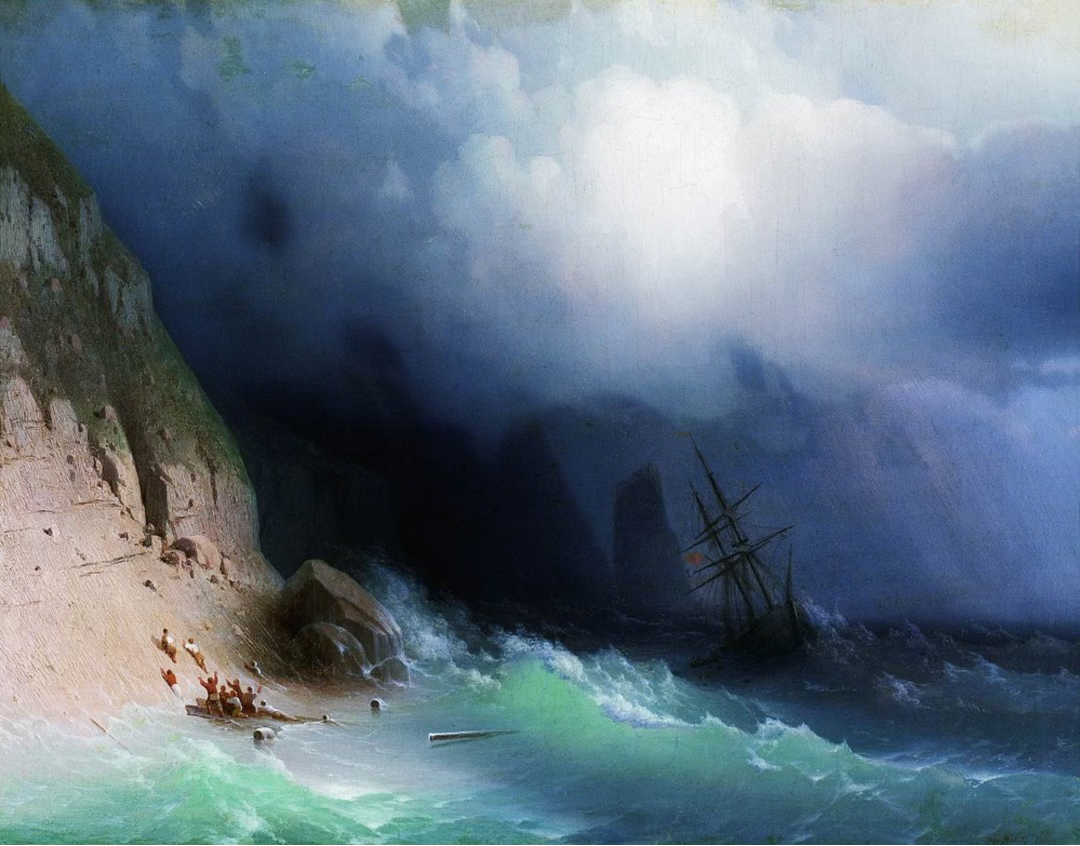
Rig for pain—The value of a pro-failure mindset is not limited to war since it is not a place but an existential posture. It can be brought to bear anywhere: work, play, reading, school, sitting with family, walking down the street. Take ill health. Navigating life and relationships with illness or autoimmunity is like steering a ship at night, in the fog, in a hurricane, near a rock studded coast. Eventually, you come to accept both the risk and actuality of crashing, as well as the blind and savage faith in yourself to endure the shattered ship, the pitiless waves, and the grunting crawl ashore. Eventually, you learn to love it.
Eventually, you learn to rig for pain. This is a SEAL expression. It means we ought to prepare ourselves for heavy seas, hypothermia, voices wailing and gnashing their teeth in our skulls, fear, illness, disease, silky snaps of bullets, stepping outside of the groupthink of a culture, putting values to the test, and asking questions no matter how uncomfortable they may be.
In a word, to rig for pain is to train for failure.
A life of failure—It is a paradox that a life of failure can be proof of a love of life.
If you find these essays striking and want to support my mission, please consider liking and subscribing.

This is a bit tongue in cheek. There are some good studies, but they only focus on operational efficiency. Never have I seen the attempt to understand the existential vitalism present in this culture and how to capture it outside of this culture. This is one of the core themes of my creative work.
There is something undeniably alive in what you’re describing: the sharpening that comes from voluntary exposure to difficulty. But I keep returning to another layer beneath it: attention.
Chaos expands capacity only if the interior remains coherent. Without disciplined attention, chaos does not awaken... it fragments. It produces noise rather than aliveness.
Perhaps the real training is not merely to rig for pain, but to cultivate the kind of perception that can metabolise intensity without dissolving into it. Otherwise the pro-failure posture risks becoming just another aesthetic of extremity.
Intensity alone is not transformation. Integration is. What do you think?
It is hard to win without failures. The indoctrination of “useful idiots” started with participation trophies for kids instead of having medals for winners.