

Why Life Is Merely A Game Of Checkers
Heraclitus. Nihilists. Perspective. And laughing at all of it.

Writer. Navy SEAL. Dispatches on meaning and hardship.
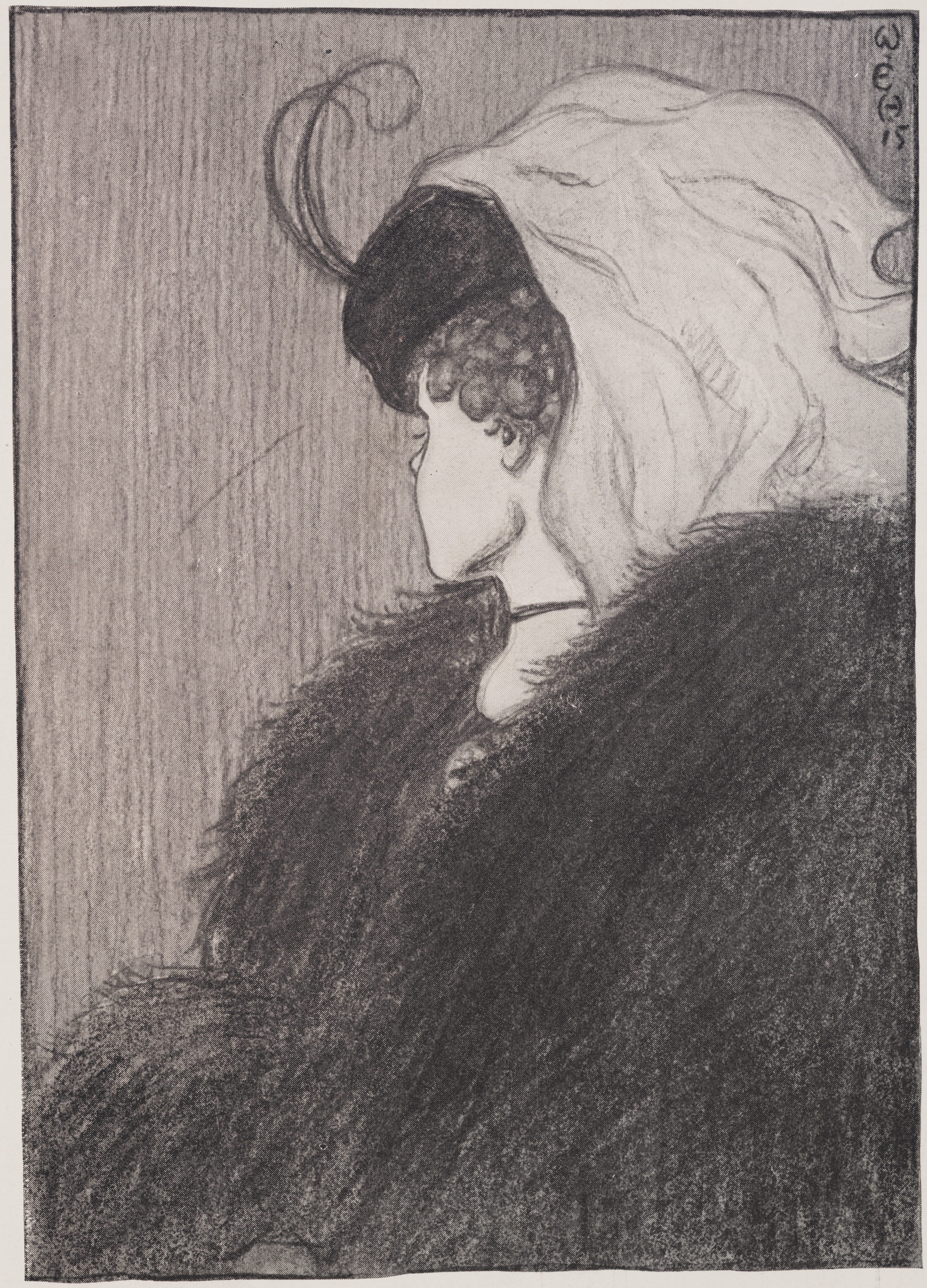
Perspective is all. What do you see in the image above? An old woman? Or a young woman?
Today’s piece is about perspective. My theory on Stoicism is it is like 1RM (one rep max) deadlifts: if you are going to do it, do it hard, do it fast, and then… let it settle in. Give it a few days of slow contemplative thought. Just so with today’s theme.
Let’s get to it…

It is strange how thin the line between nihilism and meaning actually is. But it is possible to recon where this line lies because meaning declines in proportion to the rise of nihilism, and never before has nihilism risen so high as it has in our culture. We find a fundamental truth of the human situation at this hinge point, along with a paradox: nihilism is proving to be a greater teacher of meaning than meaning itself.
I have been obsessed for weeks with a quote from Heraclitus, the pre-Socratic philosopher. Heraclitus’ writings were so intentionally obscure that the ancients dubbed him… The Obscure. We are therefore free to do with his aphorisms whatever we want. He was known for playing games with children rather than putting up with politicians, and drawing from the wisdom of these children’s games, he said “A lifetime is a child playing, playing checkers.”
I was torn between two different understandings of it: one of pure nihilism, and another of profound—and childlike—meaning.
So what says the nihilist? Life-as-checkers means we might be lucky enough to be born in a palace, wretched enough to be born in a favela, or merely exist in some numb neighborhood in between. Our bodies will grow old, get sick, and our bones will break. Our minds might go insane. We can lose our families, or have never known a good one to begin with, or we can end up in a toxic tribe or country. Of course the game—and the universe itself—is meaningless. Every day we might read about a mother buried in an earthquake, and then right below it read about a dictator executing hundreds of innocent civilians, obscenely obese and wealthy, without punishment. And in the end? We will die tomorrow by a window falling from a skyscraper, or in a decade with an asteroid striking Earth, or in a century when we are glad to be done with it all.
And all of this may be true.
And yet…
What is striking about the nihilist is their fixation on the problem and their aversion to solutions. What can we say to this nihilistic interpretation? Yes, we will break a femur, get a bout of cancer, and watch evil win. Yes, we will be mortared by setbacks, failures, and pain—and then we will die.
But if nihilism states that existence is senseless and meaningless, then existence may be senseless—painfully senseless—but it need not be meaningless. The crucial point is we are left with one last truth that transcends senselessness or the meaninglessness of the universe. We are left with choice—choice in how we meet the next moment, even if the next moment is the last. We can choose to find meaning in suffering or we can choose not to.
Now let us elevate this concept to its maximum potential. Life-as-checkers means if we do not like the game, or its rules, or we think it is rigged, then we are free to leave it: both the game, and life itself. The crucial point is the game comes with an existential rip cord.1 This is not a call to quit, but a perspective-shattering revaluation on suffering. It is a call to find meaning in the fight.
Nihilism chooses not to see meaning in the black metallic iridescence of a dragonfly’s exoskeleton, or the barely contained ecstasy of a dog’s front paws lifting up and down in anticipation, or how beautifully a human can suffer while overcoming some epic challenge. How worthless! The significant point is nihilism chooses not to see meaning in choice itself, which is ironic because a single choice is the difference between meaning while alive and actual meaninglessness while dead. So if the nihilist chooses to stay, then why would they complain? Why would they view the world through the reductionist lens of the affluent, the overly schooled, the bored, the bitter, the lazy, all those who choose not to capitalize on the meaning-rich-environment of suffering we are all surrounded by?
So much for nihilism.
I am left with the paradoxically cheerful conviction that life-as-checkers is to view the short span of time separating our birth and our death—and then laugh about it. It is to reframe all we think matters. It is, ultimately, to take a galactic perspective.
Let us do a thought experiment, the kind that shatters the daily sense of “normal” we all grow comfortable in. We rocket into space until we see our own life reduced to a single nanoscopic cylinder emitting a brilliant white light. It floats in galactic blackness. To its left is the entire history of mankind, the earth, the galaxy, and then the universe. To its right is the long and epic chain of humanity continuing its journey to the stars, or maybe ending in silent agony before a single star is ever reached. We hold our lives—those glowing white cylinders—in our palms. We stare down at them surrounded by that infinite blackness and incomprehensible span of time. Within that cylinder is every memory, hope, fuck up, love, fleeting success, act of selfishness, fear, and thought we will ever have. It becomes clear the cylinder is a gift.
On a cosmic scale—a scale of billions of years—what are liquid crystal displays, social media feeds, and expectations that exceed reality’s ability to meet them? What are fools passing judgment on us, childhood trauma, billions of dollars to our name, illness, broken schools, and poverty? What is every single obstacle standing in the way of meaning-in-life in this exact second?
Checkers.
What an elegant and childlike reminder we can choose to make every moment from this moment onward a reimagining, a momentous reframing of both how we live and why we live. A reminder that while some things should be taken deeply seriously, every second we have left can be one of love, devotion, and creativity—one of meaningful and playful checkers until the very end… and to do so with a laugh.
If these ideas strike you, please share them: restack this essay or share it with others.
Εἰς μελέτην
For meditation
I came up with this concept in a prior essay about Hell Week, WWII, and complaining. The ancient philosopher Epictetus, my favorite philosopher, has another version in which he states, half-ironically and half-seriously, “The door stands open.” This is also a reference to the fact that life is a choice, and so long as we are not suffering from a legitimate issue, we have no reason to complain, moan, and be ungrateful for what we have been given. The open door is the ultimate perspective shift.
Oh, to have been an apprentice of Heraclitus. What that would have been like.
I am darker than most, maybe because I have seen what humans are capable of doing when left to their own primal instincts. I would argue that the human condition tends toward violence by default, and that the few who try to make that reality different are the ones who might treat life as something to answer, not something to score.
No, not checkers. Go. A game of Go. Or better yet, Hnefatafl, asymmetrical and always forcing you to play against the odds, whether you are the king and his men or the attackers. Then let us say this: a lifetime is a child playing Hnefatafl.
Great stuff, Sam. Have you read Rumi’s “The Sheikh Who Played with Children”?
https://atalkata.wordpress.com/2009/07/15/the-sheikh-who-played-with-children/