

The Cure For Unlimited Choices Is... To Do Something
Rules in life. Choosing to live. Creativity. Nature. Socrates.

Thinker. SEAL. Dispatches on meaning and hardship. Also figs and dogs.
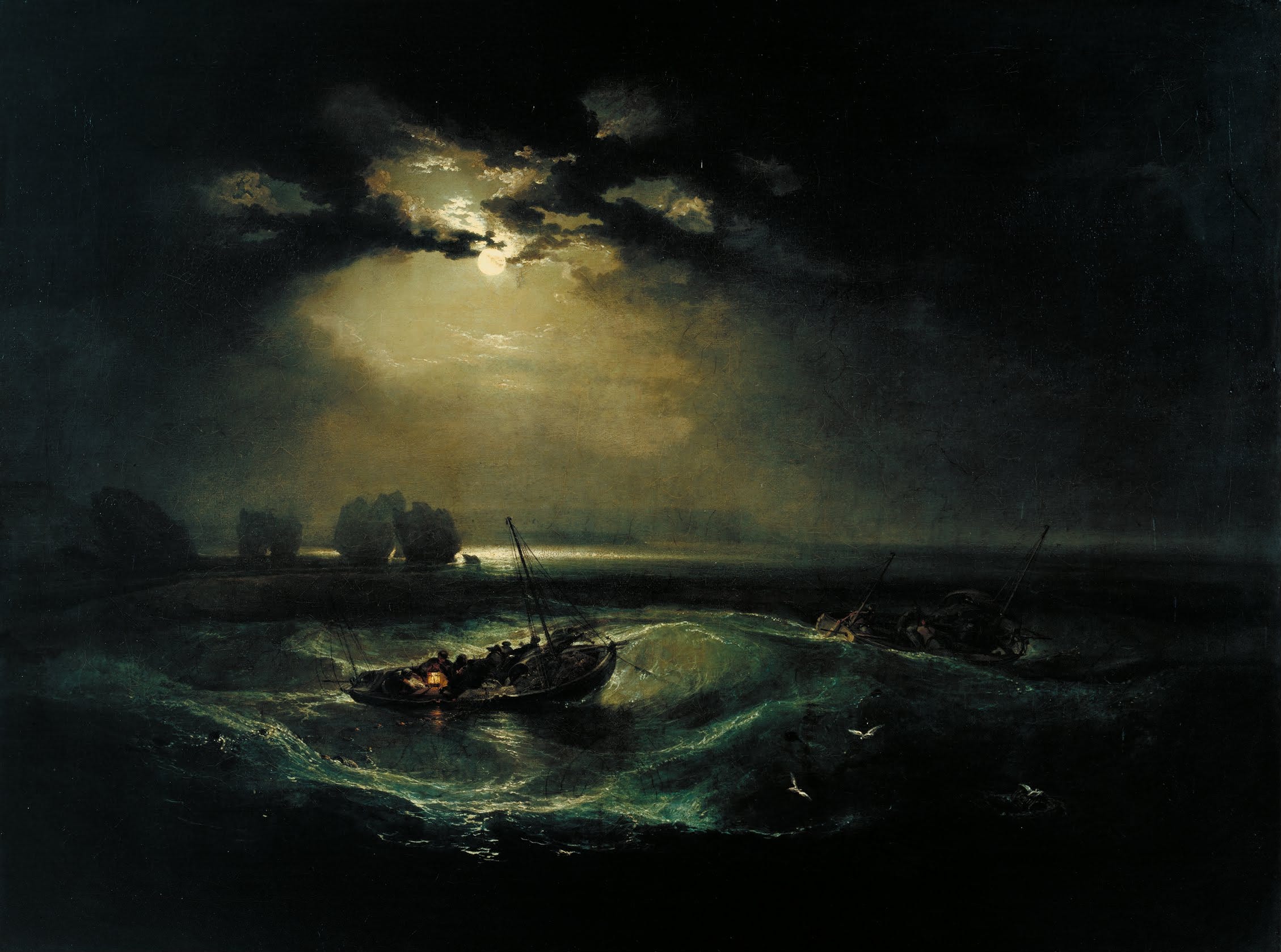
I write these essays to slow down, enjoy an ancient rhythm, and think deeply in a world increasingly designed and monetarily incentivized for us not to think at all. These essays are not meant to capture your attention and then hammer it with bite sized content, copy-and-paste text from an LLM, angry political rants, or a list of bullet points telling you how to live your life. There is enough of that elsewhere. Rather the intent is a sustained meditation on what it means to be here, a rough sketch at an existential posture, and questions that may never be answered but are fascinating to ask.
Like life, it is a good fight.

We are given many rules on how we ought to live our lives. There are a stunning number of people who know exactly what you and I need to do so that we may, at last, live a perfect life.
My hunch, however, is one rule rules them all, a rule learned in combat: Do. Fucking. Something.
Doing something may not always work out well. But on the whole, it works out better than doing nothing at all. It is also better than doing something half way. We will fail, thank the gods, for failure is to the soul what water is to the desert traveler dying of dehydration. Why, then, wait for the bullet-pointed how-to list? The scientific study? The mystical revelation?
The problem is the human situation is defined by an uncomfortable awareness: unlike a humming bird or a fig tree, we know we possess unlimited opportunities. It is strange to see a human built to endure a handful of life-and-death trials crippled by the luxury of a million choices. Do we choose one job among a dozen, or none at all? Do we choose one spouse from among forty, or none at all? Do we choose one book among a million, or mute our minds and scroll social media? And if we do have a job, a spouse, or a book, do we savor them, or do we merely live with them because we do not know what else to do with ourselves? It is becoming clear these opportunities are a burden for many.
Thus some choose to latch onto any option as if it were a life raft. This is to live a life of empty busyness. Others choose to depend on others to take care of them, providing them with shelter and food, such that they can live no life at all and drift unto death. And there is another, darker path. Let us do a bit of apocalyptic prophesizing. Some may choose to burn it all down in the subconscious and primordial hope they will be freed from burden of endless choices. And what then? It is reasonable to assume they will not find moon stories and warm caves. Instead they will find the smoking post-apocalyptic wasteland of Cormac McCarthy’s The Road, or yet another attempt at a socially engineered utopia that “will be different this time.”
It seems, then, that unless we live at the very edge of life-and-death in hard times—which has its own problems—unlimited opportunities in easy times is overwhelming for the individual and cataclysmic for civilization
The cure is actually simple: analog and ancient forms of engagement by doing fucking something, even if it means sitting in silent contemplation, but with a conscious and decisive mode of mind. It elevates limiting our own opportunities into to a higher human art.
Let us turn to the Arawete of Brazil. For the Arawete, “death is the event that literally puts society and the person into movement.” Death was a constant topic. “They spoke about what the dead said, what they did, their appearance and gestures, their qualities and quirks. And the dead spoke plenty as well. The songs of dead shamans and warriors were always remembered.”1
The Arawete do not worship death. They felt sorry for the dead, not the living. The crucial point is that when we compare the unlimited opportunities when we are alive to the zero opportunities when we are dead, the solution is stunningly clear: define what matters, and then dedicate every cell in our mind and body to it.
We are not at our best when the enemy burns the boats at our back. Rather we are at our best when we burn the boats at our back, stare into the fire, spread our arms, and smile into it—and then continue the mission with a single-minded devotion.
We can also approach this theme from a galactic angle.
I have had a recurring day dream for as long as I can remember. When I close my eyes I see myself standing on an asteroid on the edge of the universe. The sky is black. In front of me is the infinite black Void. There are no stars, and no lights. Behind me are trillions of white and yellow galaxies and sweeping swaths of nebulae in hues of violet and blue. Stars are being born. Civilizations are rising and falling. Life is exploding into being and disappearing with a silent sigh. This is my Forward Operating Base. It is the last outpost at the edge of the universe.
When I open my eyes and come back to earth this sense of life stays with me. This is a galactic perspective, this galactic perspective is an existential perspective, and this existential perspective is defined by the most fundamental choice we all possess in each and every moment of our lives: to live or not to live. Life is a choice. If we choose to exist, we therefore choose to endure every illness, pain, and doubt, and we choose to see them as either a miserable misfortune or a momentous gift.
Suddenly, all our endless options do not weigh as much as they did a few minutes ago. Suddenly, each next decision, no matter how small, feels like an explosion of discovery. A raw and playful seriousness for all that may come.
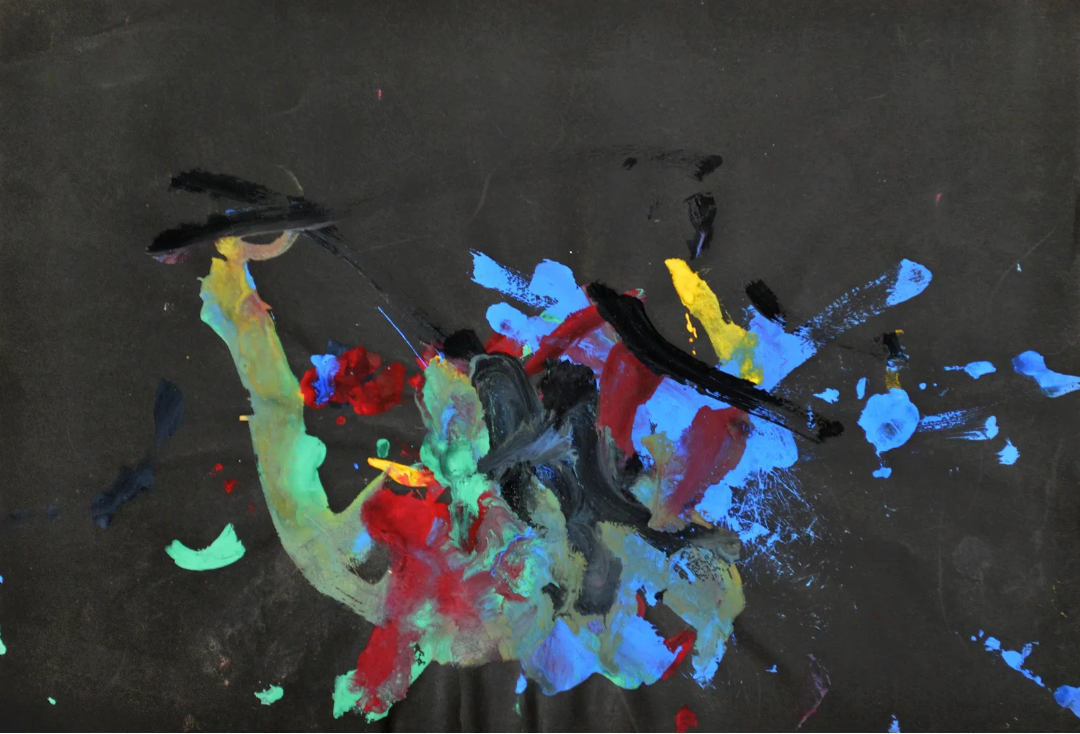
We witness this playful seriousness in our early history. A chimpanzee named Congo left behind over four hundred drawings and paintings, some of which were sold at auction.2 His distinctive “radiating fan pattern” was admired by Picasso. In his passion he would throw a fit if he were not allowed to finish a painting once he had begun, and only he could decide if it were actually “finished.” Just so with pre-civilizational humans. It is hypothesized every blank surface an early human wandered across—boulder, cliff, cave, even their own skin—was covered with handprints, animals, and geometric symbols. They would use charcoal, paint, blood, mud, literally anything that could attune them more closely to nature, the same nature that gave them the gift of consciousness and reflection.
What a paradox we in the modern world are faced with. On the one hand, we have a “lower” primate who will stop what he is doing, dip his fingers in some paint, and capture the beauty of his unique existence in the short time he has been given. On the other hand, many of us “higher” primates with our phones, entertainment, and abstract civilizational and apocalyptic concerns, are too busy, tired, or apathetic to capture the epic essence of our own brief time here on earth with a haiku or finger paint. We might even think such time wasting forms of play are merely for monkeys… and children.
Which, then, is low? Which is high?
And what can we do about it?
Nature is a Way.
I saw a seven sisters rose on a long ruck with my mutt. It had apple-tinted branches with hooked pickers, wrinkled and luminescent white petals, and in the center of each flower sat twenty or thirty brown-tipped stamen. When I stepped back from the colossal wall of ferns and underbrush to soak in the scene, something about these exceptionally white flowers checkered across this shock-green wall struck me as violent. It was an elegant violence. It was as if each tiny black stamen were an individual crack of sniper fire and the green wall were erupting in white hot muzzle flashes.
Nature reminds us our tenure on this earth is finite when we go for a long enough walk in the woods. A walk is soothing not because we walk in our bare feet and fairies fly in the dell. It is soothing because it places us before the sublime: three parts awe and one part terror. A staggeringly beautiful forest speaks to us through the ancient and unseen umbilical cord connecting us to her.
What, then, does she say? I have given you all you need: breath, flesh, paint, reason, mutts, muscle, monkeys, children. You can enjoy my house for a little while. But then you will need to claw and logic your path to survival. What happens next is up to you. Do you choose to innovate, or die? Calm your heart with your breath, or die? Walk at night, stare at the moon, and find awe in the fact of your existence, or live a life of living-death? Do fucking something, or you will wake up and find it is too late to do anything ever again.
We no longer have to live at the mercy of nature’s brutal binary. A clear, contemplative, and invigorating life according to nature is now a simple choice.
One of my favorite thinkers made this truth the foundation of his life. When Socrates was asked what the best occupation any of us could ever pursue was, he replied, “Effective action.”3
Yes. Socrates adds a crucial caveat to our definition—effective. If it is not effective in making us expendable and useful to our kith and kin, and if it is not in service of our profound pleasure in asserting our existence in this vast, violent, unknowable, and exceptionally beautiful universe, then what the fuck is the point?
If you found value here, please support in what way you think is best: restack this essay, share it with others, or become a paid subscriber.
Viveiros de Castro, Eduardo. From the Enemy’s Point of View: Humanity and Divinity in an Amazonian Society. Translated by Catherine V. Howard, University of Chicago Press, 1992
One of Congo’s epic paintings:
Xenophon’s Socrates, not Plato’s. It is arguable this is the more realistic Socrates—the practical, concrete, action oriented Socrates, rather than the abstract, academic, brain scrambling utopianist Socrates of Plato’s later writings.
Εἰς μελέτην
For meditation
Reading this, I found myself thinking that the problem may not be unlimited choice itself, but our expectation that we should be able to choose without loss. Every meaningful choice closes a thousand other doors. A life, by definition, is an act of exclusion. Perhaps paralysis does not come from having too many options. Perhaps it comes from refusing to grieve the possibilities we must abandon in order to become something specific.
In that sense, "do something" is not only a call to action. It is also an acceptance of sacrifice. Every path chosen becomes a cemetery of unlived lives. And yet, as you suggest, remaining at the crossroads forever is its own form of death.
On the lookout for Congo originals for my office.