

How To Live On Dog Time
Dostoevsky and the ills of human time

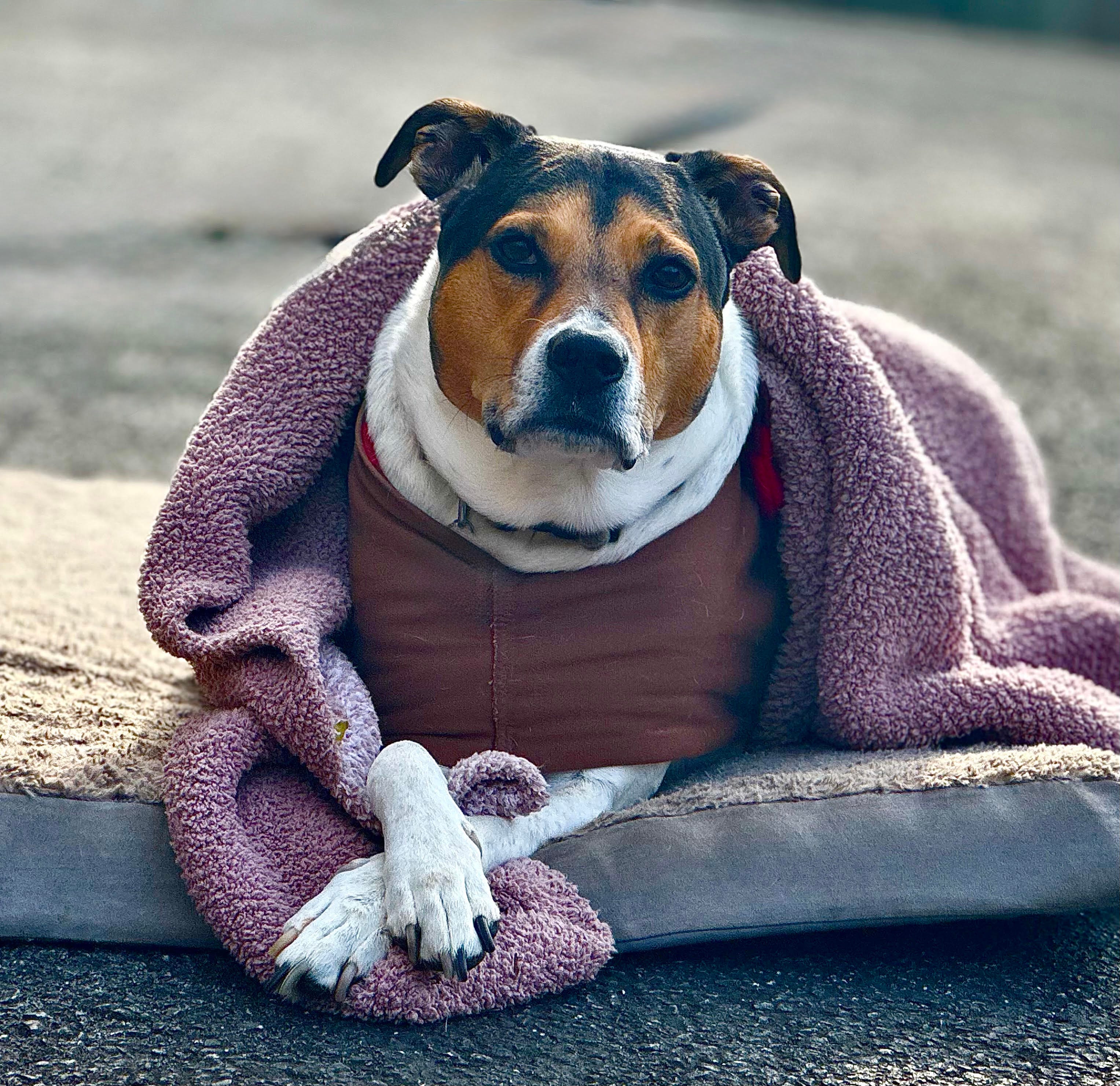
Welcome back to What then? As I wrote in a past essay, these essays are neither self-help nor instructional. Instead of the How, my loves are the Why and the What. Why self-help, self-destruction, civilizational atrophy, and meaninglessness define our age. What the most awake and alive expression of human experience once looked like—and could look like once again.
But sometimes between essays on the human situation I like to write a piece on the human-dog situation.
Thanks for being here.
Let’s lean into it.
I was re-reading Dostoevsky’s Notes from Underground when I felt eyes on me. Looking over the book, I saw Carson, my mutt, staring at me from across the room with a fanatically intense expression. I was midway through my favorite passage when I put the book down to play with him. At that moment Carson cast the meaning of the passage in a different light.
It struck me there exists a difference between human-time and dog-time.
Dostoevsky understood the dark underbelly of the modern world better than anyone. The nihilistic antihero of this novel is the unnamed Underground Man. Our antihero explains the mentality of the modern man who constantly strives for a single goal in life: “…incessantly and eternally to make new roads, wherever they may lead.” And if the road is complete, he will destroy it. Why? So that he can make it again. And if he is placed in a utopia where he can “…sleep, eat cakes, and busy himself with the continuation of the species” and where no roads need to be built, what then? He will burn it to the ground—and make more roads.
The point is that human-time means staying busy. More specifically, it means avoiding idleness. Because when we are idle, we have to gaze into the void.
Human-time is designed to shield us from a few questions: Why am I building this road in the first place? Why do I need this road at work, that road in my smart phone, and yet another road in my laptop? Why am I so obsessed with treating my life as a container I must manically fill rather than a script I may poetically write? Why if I stopped building roads long enough to answer these questions, and then built a road I actually gave a damn about?
But Dostoevsky lived one hundred fifty years ago, and he did not know the half of it.
What happens now?
The body is maxed out on human-time. It is now possible to use a pot of caffeine, a bit of nicotine, a sniff of Adderall, a line of blow, a can of Monster, and a never-ending blood-sugar high of feel-good and nutritionally toxic food. For roads are no longer macadam but pixels, and we need a little boost to really keep up with these new roads. A road is 55 miles an hour, but the internet is 186,000 miles per second.
The mind is maxed out on human-time. It is now possible to have thirty tabs up on multiple screens: spreadsheets, slack, search windows, LLMs, news, social media. There are some who thrive on this multi-tasking, but most are left with their attention and capacity for deep work torn to shreds. Gone is a singular stretch of cement to obsess about and drown out the void, for in its place are infinite roads, digital roads that can be disappeared with the click of a mouse and built anew with the spastic twitching of fingers.
The soul too is maxed out on human-time. It is now possible for modern humans to live a fiction each waking hour of the day without a single unwanted glimpse behind the curtain. In Dostoevsky’s time, the void would open at night. The luckless road-builder would have to resort to a book, a conversation, or maybe a few shots of vodka to quiet the voices rising from the depths within: Why am I doing this? Did I actually author my own life? No more. Not with laptops, smart phones, and televisions with inviting colors and pleasing sounds to vaporize hours of unpleasant introspection.
Human-time is maximum time. Podcasts at 2x speed. Hustling, hacking, producing.
But Carson, my mutt with eyes so copper-colored they cut to the core of my soul—he has no patience for human-time. Why do our dogs stare at us as if today were Judgement Day and they are sadly condemning our woeful condition? It may be because the modern world offers us a choice in how we spend our time.
I believe the dog is our ancient anchor in this modern war for meaning. A cure to the evasion of the void.
If ours dogs could speak, what would they say? You are not immortal. You will die, I will die, we all will die. Your pills, tabs, emails, phones, and hacks will only delay your inevitable wake up. Wake up now while you have time to make amends. Wake up now so you do not wake up in terror when your time has run out. Do you not realize this void is not an enemy but an ally? It is an invitation to think on what actually matters in your time here. Look within, for the void will not bite you. Sit still, for the void will not sting you. This life of ours is a gift, every second of it, even the pain of loneliness and uncertainty and doubt, for they are reminders to make a change. Do you not realize the only legitimate response to every ache, breath, failure, joy, and fight in your life is to make of it something beautiful and lasting? To flow with it? To make a poem of it? That all of this is entirely within your control?
Samuel Butler said “The great pleasure of a dog is that you may make a fool of yourself with him and not only will he not scold you, but he will make a fool of himself too.” Only a fool would live by dog-time. Only a fool would stop building roads to nowhere and set aside time to explore the void and what it says about us and the world we live in. The fanatical eyes of our dogs say this: Be a fool.
Our dogs, who have not forgotten the ancient laws, are willing to follow us in our foolishness. A fool would power off the phone for a few hours. Or walk in the woods with mutts and kith and kin. A fool would trade a laptop for an old a book, some slow and psychological novel, and smell that old paper smell.
A fool would not keep up with the “future” or “progress” or with those who say “you will be left behind.” But is this really a loss? If it is, at least a fool will still be human, for human-time has become something all too inhuman. It is still possible to max out a life—every second of it—with our quadrupedal kin at our sides, for they remind us of the true meaning of time.
Not long ago I travelled across the country for an event in California. I could feel the suits and the schedules getting to me when halfway through the night I saw an inch long white hair on my suit. It was Carson’s hair. My shoulders instantly unclenched, my talking slowed, and my mind re-centered. My furry savage of a mutt reminded me to live on dog-time and he was 2,600 miles away. Just so when I flew back and saw clumps of white fur in the cupholders of my truck. And again when I got home and heard the thump thump thump his tail makes on the wood floor every time I walk within five feet of him, and yet again when we wake up in the morning and look at each other as if it has been ten years since we saw each other last.
This is what it means to live on dog-time.
What then? is a passion project. If you find value here, there are a couple ways to support:
Become a paid subscriber or a Plank Owner
Leave your thoughts below
And share with someone you know.
This is how more readers find my work.

I've got an orange cat who is kind of a dick, but he does get up at 4 and sit on the chair next to me while I write every morning. Cats are not as nice as dogs, but I like them.
“Sorry I missed the meetings, guys — I switched all my clocks to dog time.”